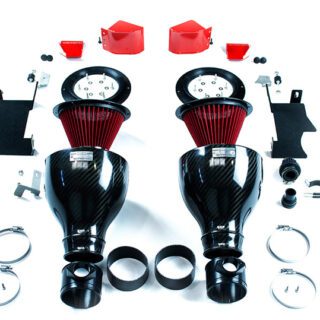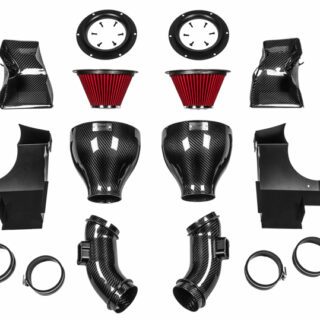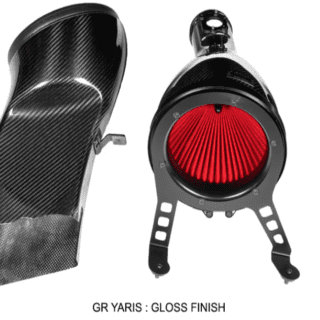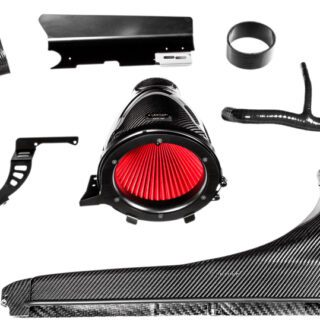
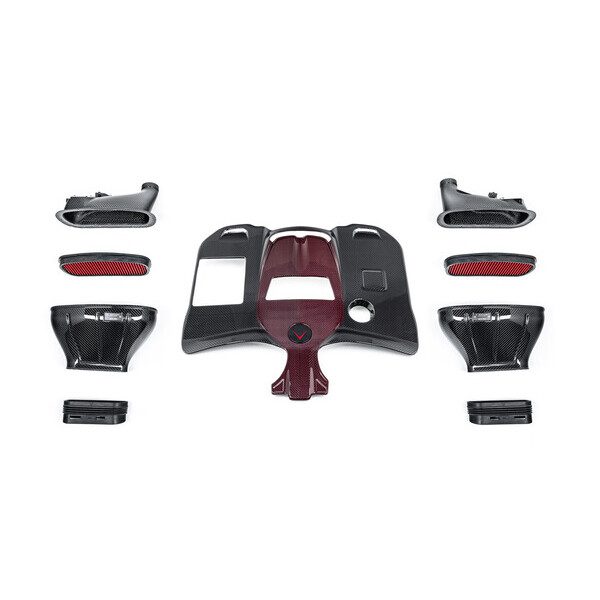
Introducing the Eventuri G63 AMG intake system. Fits W463, W463A, and W464 models with engine code M177.
The Eventuri intake system for the G63 AMG W464 is precision-crafted from pre-preg carbon fiber, featuring CNC-machined components and custom-designed high-flow filters. This intake system sets a new benchmark for increased performance in the aftermarket segment for this platform. Taking advantage of the additional space under the hood, we’ve significantly increased intake volume, achieving an impressive 25% more airflow than the OEM airboxes while maintaining the stock cold airflow.
The larger intake volume also facilitates smoother airflow, allowing the turbochargers to draw air with reduced resistance. This results in a reduced wastegate duty cycle and, ultimately, improved overall performance.
To accommodate the larger intake duct, we redesigned the engine hood to include a custom-molded heat shield with high-temperature silicone insulation. This innovative design protects the hood from excessive heat generated by the turbochargers and manifold.
The Eventuri G63 AMG intake system delivers industry-leading performance while offering acoustic and visual enhancements for a richer driving and ownership experience.
The Eventuri G63 AMG intake system is comprised of several purpose-built components manufactured to the highest quality standards. We use 100% pre-preg carbon fiber, with no fiberglass, which allows us to achieve a smooth internal surface for smoother airflow. Here are the details of each component and the design philosophy behind them:
Each intake system consists of:
Carbon fiber airbox bases
Carbon fiber airbox covers
Custom high-flow dry filters
Carbon fiber engine cover
CNC-machined sensor mounts
Custom EPDM flex duct connectors
Laser-cut stainless steel brackets
AIRBOX ASSEMBLIES
The airbox assemblies feature a two-piece design, with upper and lower sections separated by filter panels. Each section is carefully crafted to maximize internal volume while ensuring an unobstructed path for airflow to the turbochargers. The primary challenge in this project was to increase the internal volume of the airboxes to improve flow capacity compared to stock airboxes. Given the compact nature of the G63 engine bay, this was achieved by optimizing the internal height of the airboxes. The most significant improvement came from widening the airbox top covers, resulting in a substantial increase in volume and a smoother, more efficient airflow path.
AIRBOX COMPARISONS
A direct comparison of the Eventuri intake with the OEM airboxes clearly shows the difference in volume and improved flow path. The OEM system’s cold air supply connects to the airbox via a long, flexible duct of limited size. This also leaves little room at the base of the airbox to shape the incoming flow over the filter. We incorporated most of the cold air supply length into the base of our airbox, allowing for a much larger internal volume and a more organic flow path for maximum filter exposure.
The OEM airbox cover is further limited due to the close proximity of the filter panel to the turbo inlet. Airflow must negotiate a very narrow transition from the rectangular filter to the circular turbo inlet positioned on one side of the airbox. This results in stagnant flow in significant areas of the filter, resulting in additional drag. We lowered the position of our filter, leaving more room for the transition to the turbo inlet. This allows for more effective filter use with minimized turbulence and significantly reduced drag on the turbos.
ENGINE HOOD
By utilizing the space under the hood, we maximized the volume of our intake system, but this also required redesigning the engine hood, as the OEM cover is located close to the OEM air intakes. The new cover is made of pre-preg carbon fiber and features high-temperature insulation to protect it from the heat of the turbos.
Maximizing the size of our intake was only possible by designing custom filters. Our high-flow panel filters use a multi-layered dry media for effective filtration, while also offering a curved profile to eliminate unnatural angles in the airbox design that would otherwise cause turbulence.